
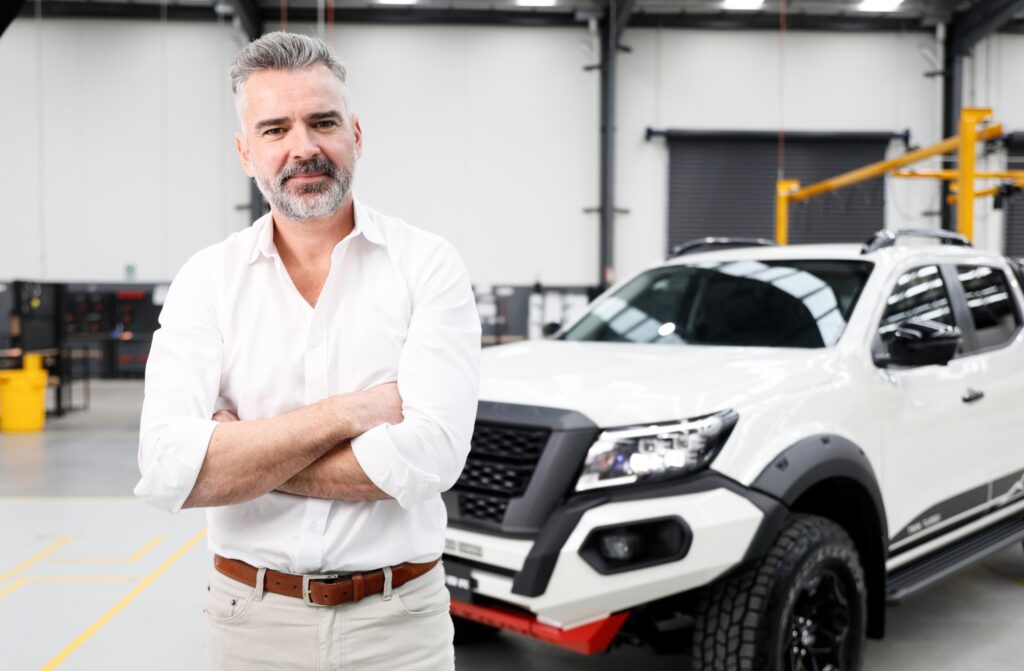
“Productivity has gone backwards since we lost the car manufacturing industry.”
It was October 20, 2017, when the last car manufactured in Australia rolled off the assembly line in Elizabeth, South Australia.
Not even 10 years ago.
It was a red VF Holden Commodore SS-V Redline sedan.
The closure of Australia’s Holden, Ford and Toyota manufacturing plants meant thousands of job losses. Many Australians saw it as the end of an era, a heartbreaking loss.
But despite the naysayers, there are many who believe manufacturing cars in Australia is still viable – including Prime Minister Anthony Albanese and Premcar CEO and co-owner, Bernie Quinn.
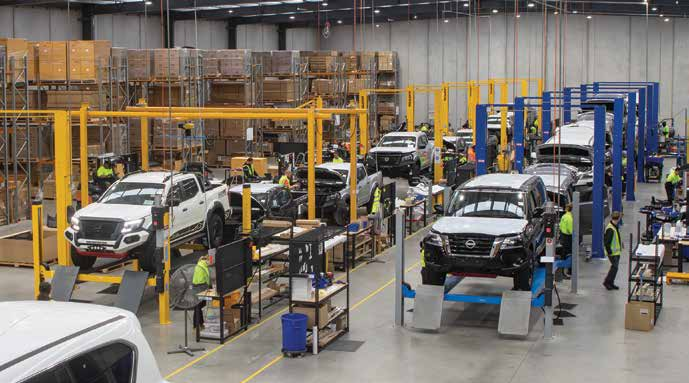
Australian automotive manufacturers, such as Premcar, have already successfully moved from mass-market traditional passenger car manufacturing to specialized manufacturing and engineering.
Premcar is where car manufacturers go when they want to add excitement to
their new-vehicle model ranges or meet the needs of a different market. And they’ve been doing this for 30 years – largely because there isn’t one perfect vehicle that suits the Australian customer, or environment.
Bernie Quinn explained: “The Australian conditions and the Australian customer are very unique. We have a massive country, almost the size of the USA, but with a much smaller population and large distances between the major clusters of the population. So, we have to have vehicles that can deal with congested city roads but also travel vast distances between those, on highways, suburban streets, gravel roads, mountain roads and so on.
Far from generic
“All of those vehicles were developed overseas for a global audience, a generic audience. And the Australian audience is far from generic. So, we take those generic vehicles and convert them into vehicles that are much more suited to the Australian roads, the Australian geography and the tastes of the Australian customer.”
But more than that, Bernie believes there is a cost-effective way in which cars could once again be built in Australia. Having spent a lifetime in the automotive industry, he is still as excited about its future as he was when he joined the industry in 1995.
“I was lucky enough to graduate into an industry which was thriving at the time. Ford, Holden, and Toyota were producing around 100,000 cars per year. It was great for me because I was so passionate about automotive and cars in general. I got this great opportunity to live my passion out through my career.
“The reason it was thriving at that time was because we were coming out of a time when the industry had been protected by tariffs. This was a deliberate strategy by the government to protect the local players, to encourage big car companies to come and manufacture cars here. And it worked quite well in terms of building an industry from nothing. It gave a lot of people a lot of skills and it gave this country a lot of capability.
“For various good strategic reasons, those tariffs were slowly removed. The industry became less protected and therefore had to become more competitive and innovative. And it did. Ford, Holden and Toyota were producing some really world class cars at prices that were comparable, if not better, than equivalent models in countries like the US and Europe.”
No longer competitive
But, said Bernie, when the global financial crisis hit – and currency was artificially high – manufacturing cars in Australia was no longer competitive from a commercial point of view.
“But it was a temporary situation. When the currency was back at 75 cents, the industry would have been more than competitive again. It was a real shame that decisions around the future of the industry were made at that time,” said Bernie.
But it wasn’t just the loss of jobs; it was also the loss of critical infrastructure in terms of manufacturing facilities, which would cost billions of dollars to recreate.
“So now, Chinese manufacturers are sending a lot of cars to Australia at relatively low prices. Even the really seasoned campaigners that exist in Europe, USA, Japan and Thailand are struggling against that. With a smaller market, it would be very difficult for little old Australia to compete with them level for level.
“Productivity has gone backwards since we lost the car manufacturing industry and we’ve lost a lot of sovereign capability.”

Adding value
But, with a little self-belief and some government support, Premcar’s current offering could be expanded, said Bernie.
“We can keep adding value without spending the massive capital investment for the infrastructure.”
“There are manufacturers in lower labour cost countries from whom we could buy systems to create a specific vehicle for Australia. This would be a Complete Knock-Down kit (CKD), adding the right powertrain that suits the Australian needs, that can go around the city without polluting it too much, but also drive long distances between cities.
“I know we could do it at a cost that’s competitive with overseas if we take that approach. And then what we have again is an expansion of this automotive manufacturing industry with specific products suited to the Australian customer.
“These are all wins. We develop the industry again; we give Australian customers the vehicle they really need and want; we start becoming productive as a nation, and we develop sovereign capability.
Generating self-belief
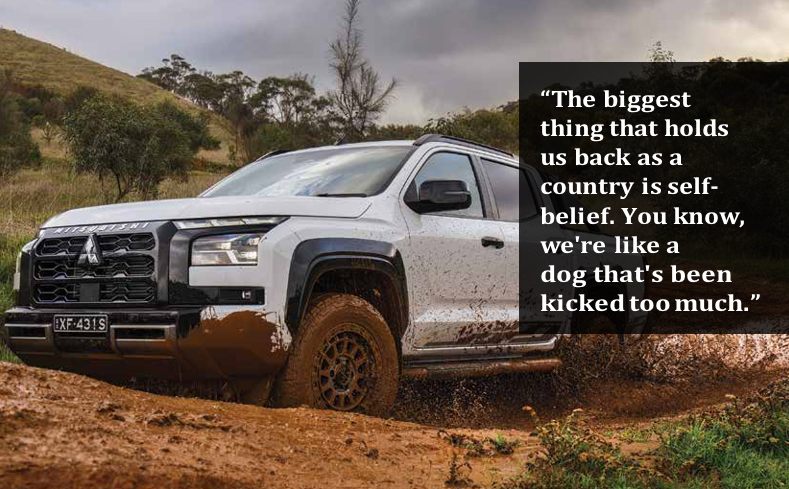
“Now what’s holding us back? Why aren’t we doing it? The biggest thing that holds us back as a country is self-belief. You know, we’re like a dog that’s been kicked too much. If we generate this self-belief, we can do it. We’ll start getting the momentum needed to build the confidence in the people that need to make the investments.”
Bernie believes there are several ways of funding Australian car manufacturing without asking for Government hand-outs. Such as scaling back the luxury car tax, the new vehicle emission scheme, and fringe benefits tax allowances.
“Just scaling some of those things back means we can create an environment where companies are incentivised to invest here and get a return on that investment. The payback is not just the four wins we spoke about but also creating jobs which will pay a lot of payroll tax. It’s a no-brainer,” he said.
The irony is that this is exactly how the Australian automotive industry began.
“Back in the 60s and 70s, when the industry was protected, we were building up Volkswagen Beetles and Ramblers and Chevs that came over in kits in containers,” said Bernie.
“We would put them together in Australia and that was the way of getting around the duties and tariffs. From that we developed our industry and capability.
“I don’t like to be dramatic but we’re getting close to a point where we won’t have those skills anymore.”
Custom made for Australian consumers
“Now, because we’ve got a very specific market with very specific needs – and because we’ve got customers prepared to pay for the vehicle that really suits those needs – we can develop cars that are custom made for Australian consumers.
“What happens at the moment is that vehicles go to the consumer, and then the consumer goes to the aftermarket to create the car they really want. Companies like ARB are doing sales of $400 million or $500 million a year because people still have that need to create their own car. It’s a unique Australian thing.”
“We can develop cars that are custom made for Australian consumers.”
One of the reasons this idea is viable is because it doesn’t require vast numbers. To give some context, Australia sold 1.2 million new cars last year.
“There are 20,000 vehicles in the Pilbara region alone,” said Bernie. “And all those vehicles have a big level of customization to make them fit for purpose for the mining industry and the environment. You can build a whole investment business case around 20,000 vehicles.
“Why not build the vehicle up from scratch so you’re not throwing away the bits you don’t need? You go out to the mining operators and the fleet operators and ask exactly what do they need? I’ve been there and asked them.
“But the time is now. I don’t like to be dramatic but we’re getting close to a point where we won’t have those skills anymore. Are we going to be the last generation? We need to do it whilst the skill base is still here so that we can get the next generation through and start building it back up again.”
When Australia built its last new car in 2017, it was one of only 13 countries in the world that could build a car from sketch to showroom, in its entirety. Australia still has that capability – and many of its supply chains are still here.
The idea of bringing back Australian car manufacturing in some form has the support of Prime Minister Anthony Albanese. The Australian Government has put $22.7 billion into its Future Made in Australia policy designed, amongst other things, to attract private investment and boost domestic manufacturing.
Catch the latest news from Premcar at www.premcar.au
To find out more about Future Made, visit www.pm.gov.au/media/future-made-australia