
As Australia moves through 2026, a complex picture is emerging. The economy is showing resilience, buoyed in part by global AI investment, but cost-of-living pressures persist and the Reserve Bank’s recent decision to raise the cash rate to 3.85% signals that inflationary headwinds haven’t gone away.
So, what should businesses, leaders, and marketers actually be paying attention to this year?
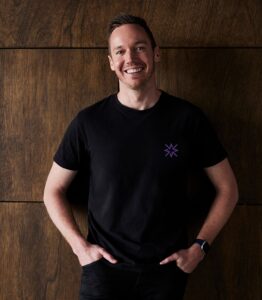
We asked Dr Ben Hamer, Founder and Chief Futurist of ThinkerTank, a leading trend intelligence agency that helps organisations separate signals from the noise so they can get a competitive edge in today’s changing world. Formerly the Head of Future of Work at PwC Australia, Dr Hamer has led critical projects at the World Economic Forum and is ranked among the Top 20 Global Futurists by Global Gurus.
Getting excited about what’s to come
Dr Hamer says he is “on a mission to build a coalition of courageous optimists, who can see past the doom and gloom and get excited about what’s to come.”
That optimism is grounded in data. Drawing on ThinkerTank’s 2026 Future Forecast, which surveys Australians on their attitudes and expectations for the year ahead, Dr Hamer highlights six key trends likely to shape businesses, workplaces, and the economy in 2026.
Whether you are a small business owner, CEO, business leader, or marketer, these forecasts will help you develop the right strategies to stay ahead of the curve.
Demographic Shift and Cultural Diversity
A key event this year is the 2026 Australian Census, which will be held on 11 August. The Census is likely to confirm significant changes since it was last conducted in 2021.
India-born Australians are on track to overtake UK-born residents as the largest overseas-born group. ABS data shows the gap had narrowed to fewer than 50,000 by mid-2024, and current migration trends suggest the shift has likely already occurred. Meanwhile, growing communities from the Philippines, China, Nepal, Vietnam, and other Asian countries are continuing to diversify both the workforce and consumer base.
“This isn’t a trend on the horizon. It’s already here,” said Dr Hamer. “The Census will put the numbers on the table, and for many businesses it will be a wake-up call. If your marketing, product development, and employee engagement strategies don’t reflect the Australia that actually exists today, you’re already behind.”
Youth Social Media Restrictions and What They Mean for Marketing
Australia’s world-first social media restrictions for under-16s came into effect in December 2025, and the early numbers are striking. Within the first month, 4.7 million accounts were deactivated across platforms including Instagram, TikTok, YouTube, Snapchat, and X. The legislation places the onus squarely on platforms, not parents or children, with fines of up to $49.5 million for non-compliance.
The implications for businesses are significant. An entire generation is being pushed away from the platforms that marketers have relied on for over a decade.
“Young Australians aren’t disappearing. They’re migrating,” said Dr Hamer. “They’re moving to closed networks, niche communities, and peer-to-peer platforms that most brands haven’t even heard of yet. The businesses that win here will be the ones that earn trust in those spaces, not the ones trying to shout over digital barriers.”
AI Agents Move from Experiment to Essential
Whether you’re a fan of AI or still figuring out what it means for your business, 2026 is likely to be the year it becomes unavoidable. AI agents are moving beyond the experimentation phase and into the everyday toolkit of workplaces across the country.
“Think of AI agents as your most capable intern, except they don’t need coffee breaks and they can work across a dozen tasks at once,” said Dr Hamer. “From managing research and scheduling to data organisation and email triage, these tools are set to fundamentally reshape how offices operate. But the real advantage won’t go to those who adopt AI first. It’ll go to those who adopt it well.”
Early and thoughtful adoption is likely to allow businesses to operate more efficiently, reduce overheads, and maintain a competitive edge as AI transforms customer service, administration, and professional research.
Energy Challenges and Climate-Conscious Innovation
Here’s the tension at the heart of 2026: technology is one of our most important tools for climate action, but it’s also a massive and growing driver of energy demand. The boom in AI infrastructure, data centres, and cloud computing is putting real pressure on energy grids at the very moment we’re trying to decarbonise them.
“This is the green dilemma that every business leader needs to get their head around,” said Dr Hamer. “Investment in renewable energy, next-generation storage, and smart grids will accelerate this year. But it’s the businesses that figure out how to innovate within energy constraints, not in spite of them, that will earn long-term trust from customers and stakeholders alike.”
Growth of the Side Hustle Economy
Side hustles are nothing new, but they’re evolving fast. Rising living costs and increasingly accessible technology are turning what used to be a weekend hobby into a genuine economic force. As more entry-level tasks are automated by AI, more Australians are expected to explore freelancing, micro-businesses, and independent entrepreneurship.
“AI tools are levelling the playing field in a way we’ve never seen before,” said Dr Hamer. “One person with the right tools can now create, market, and scale operations that used to require entire teams. That’s incredible. But it also means established businesses need to rethink how they compete. The smartest ones will find ways to partner with these agile operators rather than trying to outmuscle them.”
Analogue Experiences as Premium Offerings
As digital overload becomes a common complaint, consumers are increasingly seeking physical, slower experiences. Vinyl records, film photography, handwritten notes, and local markets are all enjoying a resurgence. And ThinkerTank’s own research backs this up.
“Our 2026 Future Forecast found that 56% of Australians want to spend less time online this year,” said Dr Hamer. “That’s not a rejection of technology. It’s a cry for something real. For businesses, there’s a genuine opportunity to integrate tactile, offline experiences alongside digital offerings. The brands that can deliver authenticity and convenience in equal measure will be the ones people remember.”
The evolving business landscape of 2026
“The organisations that will thrive in 2026 aren’t just adopting new technology. They’re rethinking what work looks like, who their customers are, and how they show up in the world,” said Dr Hamer.
“Australian businesses that anticipate workforce and demographic changes, adopt AI thoughtfully, and create authentic customer experiences will be well placed in the evolving landscape of 2026.
“The year ahead is all about recalibration. Challenges around inflation and cost of living won’t disappear overnight, but the topics that will increasingly dominate conversations around both the watercooler and the boardroom table are AI, trust, and employee wellbeing. And I think that’s something to be optimistic about.”
Dr Ben Hamer is an accredited and globally awarded futurist, ranked in the Top 20 Global Futurists and the #1 thought leader for the Future of Work in the Asia-Pacific.
As the Founder and Chief Futurist of leading trend intelligence agency, ThinkerTank, Ben works with organisations to help them think big, see around corners, and stay ahead of the game.
Ben is an engaging keynote speaker, author, and experienced adviser, providing expert advice to government ministers through to CEOs, functional executives, and line managers, helping them to identify and unpack trends to develop evidence-based strategies.
To find out more, visit www.thinkertank.co